
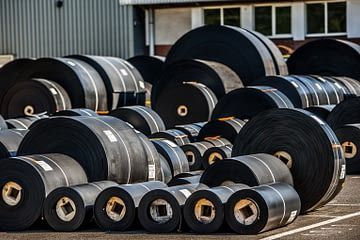
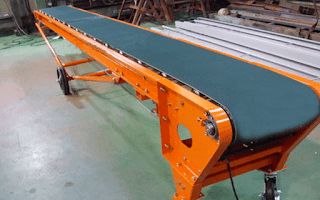
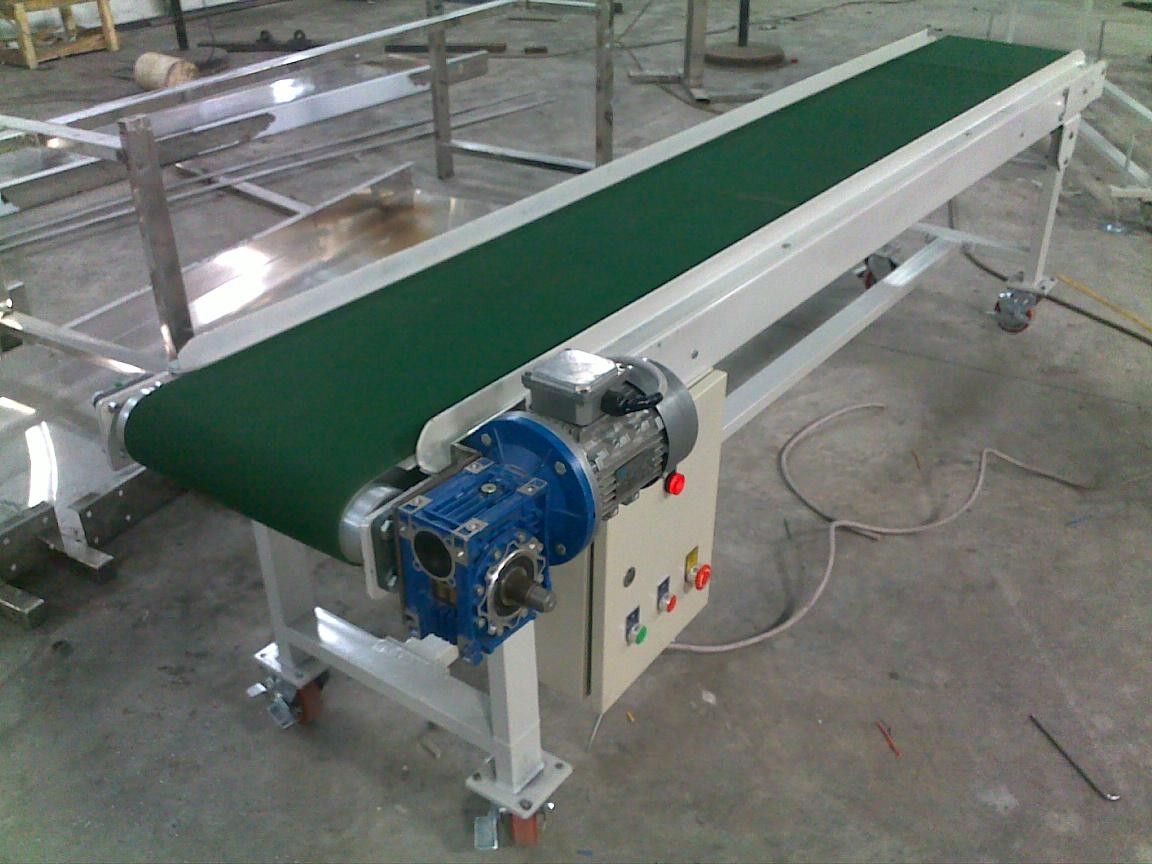
Conveyor belts are an essential part of many industrial material-handling systems. They help transport materials efficiently across manufacturing plants, warehouses, construction sites, and other industrial facilities.
When choosing a conveyor belt, one common question is: Rubber conveyor belts or PVC conveyor belts—which is better?
The right choice depends on several factors, including the type of material being transported, operating temperature, load, abrasion, working environment, and maintenance requirements.
For businesses looking for industrial conveyor belts in Qatar, understanding the differences between rubber and PVC conveyor belts can help in selecting the right solution for a specific application.
What Are Rubber Conveyor Belts?
Rubber conveyor belts are designed for demanding material-handling applications where durability, strength, and resistance to abrasion are important.
They are commonly used in industries such as construction, manufacturing, mining, material handling, petroleum, and other heavy-duty applications.
Rubber conveyor belts can be designed with different rubber compounds and reinforcement materials depending on the application.
Advantages of Rubber Conveyor Belts
- High durability
- Excellent abrasion resistance
- Suitable for heavy loads
- Good impact resistance
- Available for demanding industrial environments
- Suitable for transporting abrasive materials
- Can be designed for different operating conditions
Because of these properties, rubber conveyor belts are often preferred for heavy-duty industrial applications.
What Are PVC Conveyor Belts?
PVC, or Polyvinyl Chloride, conveyor belts are commonly used for lighter material-handling applications.
They are often found in food processing, packaging, logistics, warehouses, and general material-handling systems.
PVC belts can provide a smooth conveying surface and are available in different patterns, thicknesses, and configurations.
Advantages of PVC Conveyor Belts
- Lightweight
- Easy to clean
- Smooth surface
- Suitable for light and medium-duty applications
- Available in different designs
- Suitable for many indoor applications
- Can provide good resistance to certain oils and chemicals depending on the belt specification
PVC conveyor belts can be a practical choice when the application does not require the heavy-duty performance of a rubber belt.
Rubber Conveyor Belts vs PVC Conveyor Belts
The main difference between rubber and PVC conveyor belts is their material composition and suitability for different operating environments.
The actual performance of a conveyor belt depends on its design, material composition, reinforcement, and application conditions.
1. Durability
Rubber conveyor belts are generally preferred for applications involving continuous operation, heavy loads, and abrasive materials.
PVC belts can offer good durability for lighter-duty applications, but they may not be the ideal option for environments involving severe impact or abrasion.
For demanding industrial operations, rubber conveyor belts can provide a longer service life when correctly selected and maintained.
2. Abrasion Resistance
Abrasion is an important consideration when transporting materials such as:
- Sand
- Gravel
- Stones
- Cement
- Minerals
- Construction materials
Rubber conveyor belts are commonly selected for abrasive applications because of their strong wear resistance.
PVC belts may be more suitable for applications where abrasive materials are not a major concern.
3. Load Capacity
Heavy materials require a conveyor belt capable of handling continuous mechanical stress.
Rubber conveyor belts are widely used for heavy-duty conveying because they can be manufactured with strong reinforcement and suitable rubber compounds.
PVC conveyor belts are generally more appropriate for light and medium-duty material handling, depending on their specifications.
4. Temperature Resistance
Operating temperature is another important factor.
Certain rubber compounds can be designed for applications involving elevated temperatures, while specialized PVC belts can also be manufactured for specific temperature ranges.
Therefore, businesses should always select a belt based on the actual operating temperature rather than choosing solely based on material type.
5. Chemical and Oil Resistance
Industrial environments may expose conveyor belts to oils, chemicals, moisture, and other substances.
Different rubber and PVC formulations provide different levels of resistance.
For applications involving oil or chemicals, it is important to select a conveyor belt specifically designed for the required environment.
6. Impact Resistance
In industries such as construction and material handling, heavy materials may fall onto the conveyor belt during loading.
Rubber conveyor belts generally provide better impact resistance for these demanding conditions.
This makes them a suitable option for applications where materials are large, heavy, or abrasive.
7. Maintenance Requirements
Both rubber and PVC conveyor belts require regular maintenance.
Important maintenance activities include:
- Checking belt alignment
- Inspecting belt surfaces
- Checking belt tension
- Inspecting rollers and pulleys
- Removing material build-up
- Checking belt joints
- Identifying cracks, cuts, and excessive wear
Regular maintenance can help identify potential problems before they result in unexpected equipment downtime.
Which Conveyor Belt Is Better for Industrial Applications?
There is no single conveyor belt that is suitable for every industrial application.
Rubber conveyor belts are generally a strong choice for:
- Heavy-duty material handling
- Construction
- Mining
- Abrasive materials
- Heavy loads
- High-impact applications
- Continuous industrial operations
PVC conveyor belts may be suitable for:
- Packaging
- Warehousing
- Logistics
- Light material handling
- Food-related applications where the belt specification is appropriate
- Indoor conveying systems
The final choice should be based on the specific application, material, load, operating environment, temperature, and required belt specifications.
Choosing Conveyor Belts for Industrial Applications in Qatar
Businesses operating in Qatar may require conveyor belt solutions for construction, manufacturing, material handling, petroleum, marine, and other industrial environments.
When selecting an industrial rubber conveyor belt in Qatar, consider:
- Type of material being transported
- Load capacity
- Conveyor speed
- Belt width
- Operating temperature
- Abrasion level
- Exposure to oil or chemicals
- Indoor or outdoor operation
- Expected operating hours
- Maintenance requirements
A professional supplier can help businesses identify the appropriate belt specification for their conveyor system.
Why Choose the Right Conveyor Belt?
Selecting the wrong conveyor belt can lead to premature wear, frequent maintenance, reduced productivity, and unexpected replacement costs.
Choosing the right belt can help:
- Improve conveyor performance
- Reduce downtime
- Increase operational efficiency
- Extend belt service life
- Reduce maintenance requirements
- Improve material-handling reliability
Therefore, businesses should consider the complete operating environment before selecting a conveyor belt.
Why Choose Tech Sharp for Industrial Rubber Solutions in Qatar?
Tech Sharp Contracting & Trading provides industrial rubber and polyurethane solutions for different applications in Qatar.
The company offers products and services including rubber conveyor belts and rollers, rubber sheets, rubber extrusion products, rubber moulded products, polyurethane products, and rubber lining solutions.
For businesses requiring industrial rubber products, selecting the right material and product specification is essential for reliable long-term performance.
Conclusion
Both rubber and PVC conveyor belts have their own advantages and applications.
Rubber conveyor belts are generally better suited for heavy-duty industrial environments where durability, abrasion resistance, impact resistance, and load capacity are important.
PVC conveyor belts can be a practical option for lighter applications such as packaging, warehousing, logistics, and general material handling.
The best conveyor belt ultimately depends on the specific requirements of the application. Choosing the correct belt material and specification can improve efficiency, reduce maintenance issues, and help extend the service life of the conveyor system.
For businesses looking for industrial rubber conveyor belts and other rubber solutions in Qatar, Tech Sharp can provide products designed for a range of industrial applications.